
The Mistake Everyone Makes First
It's six-something in the morning, it's fifteen degrees out, and the garage door won't budge. So you hit the opener button again. And again. Maybe you hold the wall switch down, hoping brute force wins. It's tempting because the opener is strong, the door usually just goes up, and you're already running late for work in Peck or the drive down to Sandusky.
Here's the problem: if the door is actually frozen to the ground or the rollers are seized with ice, that repeated button-mashing doesn't free anything. It just burns up the opener's motor, strips the drive gear, or trips the safety reversal system over and over until something gives out that shouldn't have to. A frozen door is a mechanical problem, not a power problem, and more power usually makes it worse.
Symptoms to Watch For
- Door won't move at all, and the opener motor hums or strains without lifting it.
- Door lifts an inch or two then stops, sometimes with a cracking or popping sound as it breaks loose.
- Sluggish, uneven movement — one side rises faster than the other, or the door shudders along the track.
- Visible ice or frost along the bottom seal where the door meets the concrete slab.
- Grinding or squealing from the rollers that wasn't there in warmer months.
What a Technician Checks, in Order
1. The Bottom Seal
This is the first and most common culprit, and it's the easiest to rule out. The rubber weatherstripping along the bottom of the door can freeze directly to a wet or icy slab overnight, especially after snowmelt refreezes or road salt tracked in from the driveway keeps the concrete slightly damp. The fix is simple: break the ice seal manually by running a flat tool, like a putty knife or the edge of a shovel, along the length of the door before ever touching the opener. Once the seal is broken, the door usually lifts normally.
2. Tracks and Rollers
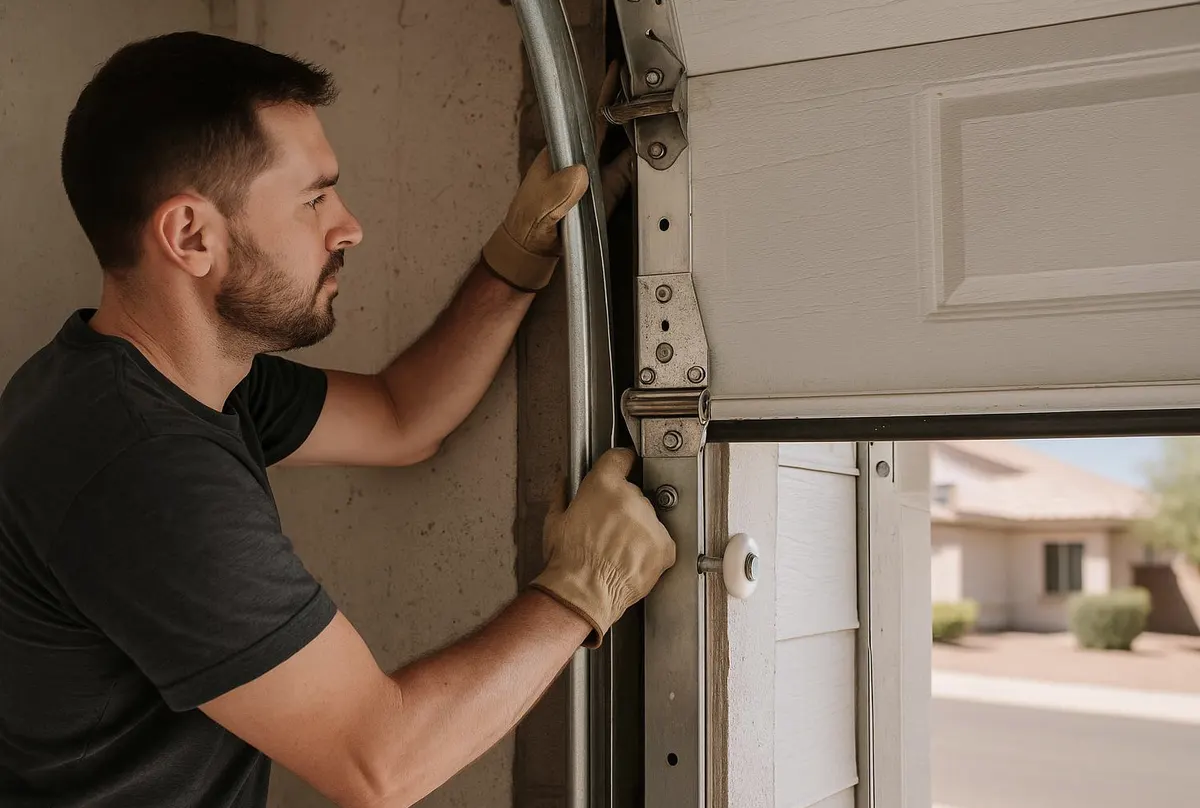
Next comes the track system. Salt spray and road grime carried in on tires or boots can build up in the tracks over winter, and that residue holds moisture that freezes. Combined with cold-stiffened nylon rollers, this creates resistance that makes the door stutter or bind as it travels. The fix involves cleaning the tracks of debris and ice buildup, checking alignment, and applying a silicone-based lubricant rated for cold temperatures rather than household oil or grease, which thickens and gums up in deep cold.
3. Springs
Steel contracts in cold weather, and torsion or extension springs lose a bit of flexibility and tension when temperatures drop hard, which is common through a Thumb-area winter. A spring that was properly balanced in October can feel noticeably stiffer in January, making the door heavier for the opener to lift and causing that sluggish, uneven motion. Checking spring tension means disengaging the opener and testing whether the door stays roughly in place when lifted halfway by hand. If it crashes down or shoots up, the spring tension needs adjustment or the spring itself may need replacing, especially if it's old and has gone brittle from years of temperature swings.
4. Opener Settings and Sensors
Cold affects electronics too. Photo-eye safety sensors can get knocked out of alignment by seasonal vibration, or fog up and misread in humid cold snaps, causing the door to reverse unexpectedly. Limit switches, which tell the opener how far to travel, can also drift over time and interact badly with a door that's already moving slower than normal due to stiff springs or rollers. A technician checks sensor alignment and cleans the lenses, then verifies the force and limit settings are correct rather than compensating for a mechanical problem with more motor power.
5. Cables and Pulleys
Last on the list because it's less common, but cables can ice up on the drum or fray where they've rubbed against a frozen pulley. This usually shows up as a jerky lift on one side or a cable that looks loose or frayed. It's addressed last because it typically only becomes the cause once the more common issues above are ruled out.
When to Call Peck Garage Door
If breaking the ice seal doesn't solve it, or the door still moves unevenly after you've cleared visible ice from the tracks, it's time to call in a technician rather than keep testing the opener's limits. Peck Garage Door handles Spring Replacement for springs that have lost tension or gone brittle in the cold, and Cable & Track Repair for tracks that have warped, iced over repeatedly, or developed frayed cables. Both jobs involve releasing stored tension safely, which isn't something to attempt without the right tools.
If your garage door is fighting you every cold morning this winter, call Peck Garage Door. We serve Peck, Sandusky, Croswell, Lexington, Brown City, Deckerville, Applegate, and Carsonville, and we'll get it moving the right way before the next deep freeze.